2025 Q4 Stainless Steel Plate Price Trend & Market Insights: China Export Perspective
Facing market uncertainty for Q4 2025? Price volatility can disrupt your planning and hurt your bottom line. We provide the clear insights you need to navigate what's ahead.
Expect moderate price volatility for stainless steel plates in Q4 2025, driven by raw material costs, global demand, and policy shifts. China's exporters will leverage technology and green manufacturing to maintain competitive pricing, creating a complex but navigable market for strategic buyers.

As the Global Business Director at MFY, I spend my days analyzing these trends. The global market is in a constant state of flux, but understanding the underlying forces gives us—and our partners—a distinct advantage. It’s not just about reacting to prices; it's about anticipating them. Let's dive into the core factors shaping the landscape for the end of 2025, so you can make informed decisions for your business.
What are the key factors influencing stainless steel plate prices in Q4 2025?
Trying to predict prices feels impossible. Hidden factors can emerge suddenly, catching you off guard. Understanding the main drivers is the first step toward gaining control.
The primary factors are raw material costs, especially nickel, fluctuating global economic demand, China's specific production policies, and geopolitical tensions. Together, these elements create a dynamic pricing environment that requires constant monitoring and agile strategy.
At MFY, we see these factors as interconnected pieces of a larger puzzle. You can't look at one without considering the others. I remember in late 2022 when a sudden spike in nickel prices sent shockwaves through the industry. Clients who weren't prepared saw their project costs soar overnight. This experience taught us the importance of a multi-faceted analysis, which is what we apply today.
Raw Material Volatility
Nickel remains the dominant cost driver for most stainless steel grades. Its price is notoriously volatile, influenced by everything from mining output in Indonesia to trading on the London Metal Exchange. For Q4 2025, we are watching supply-side discipline and the demand from the electric vehicle battery sector[^1], which competes for the same raw material. Any disruption here will have an immediate ripple effect on stainless steel plate costs. We also keep a close eye on chromium and molybdenum, as they are critical for specific grades and can also experience their own market shifts.
Global Demand and Policy
The economic health of major importing regions like Europe and North America is critical. A slowdown in their manufacturing or construction sectors directly reduces demand for Chinese steel exports. Conversely, a surge in infrastructure spending can tighten supply and push prices up. Furthermore, China's internal policies on production caps and environmental standards play a huge role. The government's push for "green steel[^2]" means producers are investing in cleaner technologies. While this is great for sustainability, these investments can add a premium to production costs, which will inevitably be reflected in export prices.
| Фактор | Potential Impact on Price | Key Indicator to Watch |
|---|---|---|
| Nickel Price | Высокий | LME Nickel Inventories, Indonesian Export Policies |
| Global GDP Growth | Высокий | PMI data from EU/USA, Construction Sector Reports |
| China's Policies | Средний | Government announcements on production/environmental goals |
| Shipping Costs | Средний | Global Freight Index, Port Congestion Reports |
How have recent economic developments impacted China's stainless steel export market?
The global economy is constantly shifting. These changes directly impact your supply chain and procurement costs. Here is how China's massive export market is adapting to this new reality.
Recent economic developments have pushed China's exporters to prioritize efficiency and resilience. Slower global growth has intensified competition, while a strong global focus on sustainability has driven investment in green production methods to meet evolving international standards.

The post-pandemic world is not the same one we operated in before. We’ve seen a fundamental shift in what our international partners value. It's no longer just about the lowest price. Reliability, supply chain transparency, and a commitment to environmental standards are now key differentiators. At MFY, we recognized this early and began transforming our operations to meet these new demands.
Navigating a Competitive Landscape
With inflation affecting major economies and some sectors experiencing slower growth, the competition for every contract has become fiercer. This environment pressures Chinese exporters to do more than just offer a good price. It forces us to be better partners. This means providing exceptional service, ensuring on-time delivery, and offering flexible solutions. We've invested heavily in our logistics and customer service teams to ensure that even when the market is tough, our clients' supply chains remain secure. It's about building long-term trust that goes beyond a single transaction.
The Rise of Green Steel
The global push for decarbonization is a major economic force. Many of our clients in Europe, for example, are now required to report on the carbon footprint of their supply chains. This has made "green steel"—produced using more sustainable methods—a major competitive advantage. Chinese producers, including MFY's partners, are investing in technologies to reduce emissions and energy consumption. This not only aligns with global demand but also helps future-proof our business against stricter environmental regulations. It's a strategic shift from being a low-cost producer to a high-value, sustainable partner.
What challenges do exporters face in the current stainless steel market?
Exporting stainless steel isn't simple. New challenges related to logistics, trade, and competition emerge constantly. We understand these hurdles because we face them every day.
Exporters face significant challenges, including intense price competition, complex supply chain logistics, volatile shipping costs, and navigating a maze of international trade policies and tariffs. These hurdles demand exceptional agility and strategic planning to overcome.

I recall a situation with a client in South America where a sudden change in import regulations threatened to delay a critical shipment by weeks. Our team had to work around the clock with local agents to re-document everything and find a solution. It's these real-world challenges that test an exporter's true capability. It’s not just about having the product; it's about having the expertise and network to deliver it, no matter what.
Supply Chain and Geopolitical Volatility
The modern supply chain is a fragile thing. We've seen how geopolitical tensions or a single blocked shipping lane can cause massive disruptions. For stainless steel exporters, this means managing risks at every step, from the mill to the final port. This includes everything from securing container space at a reasonable cost to planning for potential customs delays. A resilient supply chain isn't a luxury anymore; it's a core business necessity. At MFY, our integrated model gives us more control over these variables, which is a major benefit for our clients.
Navigating Complex Trade Barriers
Every country has its own set of trade rules, tariffs, and quality standards. Navigating this complex web is a major challenge. Anti-dumping duties, countervailing duties, and other protectionist measures can appear with little warning, fundamentally changing the cost equation of a deal. Success requires a deep understanding of international trade law and strong relationships on the ground in key markets. This is an area where experience truly matters.
| Challenge | MFY's Strategic Solution |
|---|---|
| Price Competition | Integrated supply chain for cost efficiency, value-added services. |
| Logistics Issues | Strong partnerships with freight forwarders, real-time tracking. |
| Trade Policies | In-house trade compliance experts, diverse market presence. |
| Quality Demands | Rigorous quality control at every stage, clear certifications. |
Price swings hurt your budget and profits. Relying on guesswork is a risky business strategy. Proactive strategies are the only way to build stability and predictability into your procurement.
Effective strategies include adopting flexible pricing models, building deep supplier relationships for better cost control, and leveraging data analytics for predictive forecasting. Hedging against raw material costs is also a crucial tactic for achieving stability.
The old model of simply getting a spot price for every order is becoming less effective in today's volatile market. A more strategic, long-term approach is needed. We work with our partners to develop purchasing strategies that align with their project timelines and risk tolerance. It's a collaborative process. For example, for a large, multi-year construction project, we might develop a hybrid model that locks in a portion of the price while leaving another portion open to capture potential market dips.
The Power of Strategic Partnerships
A truly effective strategy goes beyond transactions. It's about building a partnership with your supplier. When you have a strong relationship, you gain access to better information, more flexible terms, and a team that is invested in your success. As an integrated company, MFY has direct control over our production and inventory. This allows us to offer our long-term partners a level of price stability and supply assurance that a simple trader cannot. We can plan production schedules together and manage inventory to smooth out the peaks and valleys of market pricing.
Data-Driven Decision Making
Gut feeling has its place, but in a market driven by global data, analytics are essential. We use market data to forecast price trends and advise our clients on the best times to buy. Our digital platforms provide real-time insights into material costs and supply chain movements. This transparency empowers our clients to make informed, data-driven decisions rather than reactive ones. By tracking leading indicators, we can often anticipate major price shifts and help our partners adjust their strategies accordingly, saving them both time and money.
How can technological advancements aid in improving export competitiveness?
The old ways of doing business are no longer enough. Your competitors are using technology to get ahead. Embracing innovation is the key to winning in the modern market.
Technological advancements, particularly digital trading platforms and smart logistics, are fundamental. They improve supply chain visibility, streamline transactions, reduce overhead costs, and enhance communication, giving agile exporters a significant competitive edge.

When we first launched our digital platform at MFY, some in the industry were skeptical. Steel is a traditional business, they said. But we saw the future. We knew that giving our clients the ability to track their orders in real-time, access documentation instantly, and communicate with us seamlessly would be a game-changer. And it has been. Technology is the great enabler; it allows us to be more efficient, transparent, and responsive, which are the cornerstones of competitiveness today.
The Power of Digital Integration
A fully integrated digital platform transforms the customer experience. Instead of a long chain of emails and phone calls, our clients can get quotes, place orders, and track shipments from a single dashboard. This digital integration does more than just save time. It reduces the chance for human error, provides a clear and auditable record of every transaction, and gives our clients complete visibility into their supply chain. This transparency builds trust and allows for better planning on their end. It moves the relationship from a simple supplier-buyer dynamic to a true digital partnership.
Green Manufacturing as a Competitive Advantage
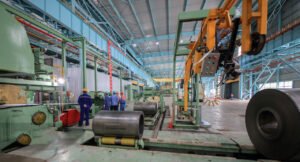
Technology isn't just about software; it's also about the hardware on the factory floor. As mentioned earlier, investing in green manufacturing technology is becoming a critical competitive differentiator. Advanced production lines that use less energy, recycle water, and minimize waste are not just good for the planet—they are good for business. They result in a lower carbon footprint, which is increasingly a requirement for selling into environmentally-conscious markets. Furthermore, these efficient processes can lead to lower long-term production costs, helping to offset the initial investment and providing a sustainable cost advantage.
Заключение
The stainless steel market in Q4 2025 will be defined by volatility, but also by opportunity. China's exporters are adapting with advanced technology and green initiatives. For buyers, the key to success is partnering with an agile, transparent, and fully integrated supplier to navigate the complexities ahead.
У вас есть вопросы или нужна дополнительная информация?
Свяжитесь с нами, чтобы получить индивидуальную помощь и квалифицированный совет.




 Русский
  English