Stainless Steel Supply Chain Revolution: Raw Materials to Finished Products
Your traditional supply chain is opaque and slow. This creates hidden costs, delays, and unacceptable risks for your projects. A tech-driven revolution is creating a more transparent, efficient future.
The stainless steel supply chain revolution is driven by digital integration, real-time data analytics, and technologies like AI and blockchain. These innovations enhance traceability, optimize costs, and improve resilience from raw material sourcing to final product delivery, meeting modern demands for speed and sustainability.
As someone who has navigated this industry for years, I've seen the profound shift from manual processes to intelligent, interconnected systems. This isn't just a minor upgrade; it's a fundamental change in how we think about, manage, and deliver stainless steel. Let's break down how this transformation is unfolding and what it means for your business.
How Has the Stainless Steel Supply Chain Evolved Historically?
Yesterday's supply chain was linear and fragmented. This led to massive inefficiencies, a frustrating lack of visibility, and slow response times. It has now evolved into a complex, interconnected digital ecosystem.
Historically, the stainless steel supply chain was a fragmented, linear process with distinct, siloed stages. It has evolved into a highly integrated, global network driven by just-in-time logistics, digital communication, and a growing emphasis on strategic global sourcing and partnerships.
When I first entered this business, the process felt like a relay race where each runner operated in isolation. Information was passed along on paper, and visibility was limited to your immediate supplier or customer. Today, the landscape is unrecognizable. The evolution from a simple chain to a complex, intelligent network has been driven by globalization and technology, fundamentally changing how companies like MFY operate and deliver value.
The Analog Era
In the not-so-distant past, the supply chain was defined by its physical and informational silos. A mill would produce steel based on large, infrequent orders. A distributor would hold vast amounts of inventory, hoping it matched future demand. Communication was slow—phone calls, faxes, and lengthy lead times were the norm. This created significant waste and risk. I remember a time when a simple customs delay in one country could go unnoticed for weeks, causing a major production halt for a client in another. There was no real-time tracking, no shared data, and very little agility.
The Digital Dawn
The first major shift came with digitalization. Enterprise Resource Planning (ERP) systems[^1] began connecting internal departments, from procurement to production to sales. Then, the internet enabled faster communication with global partners. This was the beginning of the integrated model we champion at MFY. We could finally start synchronizing our raw material procurement with our production schedules and our clients' delivery needs. This shift laid the groundwork for the more advanced, data-driven revolution we are experiencing today.
| Feature | The Old Way (Analog) | The New Way (Digital) |
|---|---|---|
| Visibility | Siloed, limited to one step up/down | End-to-end, network-wide |
| Data Flow | Manual, paper-based, slow | Automated, real-time, integrated |
| Inventory | "Just-in-case," high carrying costs | "Just-in-time," optimized levels |
| Decision Making | Based on historical data and intuition | Based on predictive analytics and AI |
What Are the Current Trends in Raw Material Sourcing and Processing?
Sourcing raw materials like nickel and chromium is volatile. Price fluctuations and geopolitical supply disruptions can cripple your production schedules and budgets. Current trends focus on diversification, sustainability, and technology.
Current trends include a strong focus on sourcing recycled scrap to meet ESG goals, diversifying geopolitical supply bases to mitigate risk, and using advanced analytics to predict price fluctuations. Digital platforms are also streamlining procurement and improving transparency from mine to mill.
The front end of the supply chain—where the raw materials come from—is where much of the risk and opportunity lies. Today, smart sourcing isn't just about finding the lowest price; it's about building a resilient and responsible foundation for the entire production process. At MFY, we've moved from being simple purchasers to strategic resource managers, and that change in mindset is critical.
The Rise of Green Steel
One of the most significant trends is the push for sustainability, driven by both regulation and market demand. Environmental, Social, and Governance (ESG) standards[^2] are no longer optional. This has put a major emphasis on using recycled stainless steel scrap as a primary raw material. It requires less energy and has a much lower carbon footprint than starting from virgin ore. We are actively building partnerships and using technology to improve the sorting and processing of scrap, turning waste into a high-quality resource. This not only benefits the planet but also creates a more circular and economically stable supply chain.
Data-Driven Procurement
Gone are the days of making purchasing decisions based on gut feelings. We now use sophisticated AI-powered platforms to analyze market trends, geopolitical events, and even weather patterns to predict price fluctuations for key materials like nickel. This allows us to make more strategic procurement decisions, hedging against volatility and ensuring supply security for our clients. I recently spoke with a partner in Indonesia who uses this data to optimize their shipping schedules, saving them millions in potential disruption costs. It’s about using data not just to react, but to anticipate.
| Raw Material | Primary Sourcing Challenge | Modern Solution |
|---|---|---|
| Nickel | Price Volatility & Geopolitical Risk | AI-driven Predictive Purchasing, Supply Base Diversification |
| Chromium | Geographic Concentration | Long-term Strategic Partnerships, Hedging Strategies |
| Scrap Steel | Quality Consistency & Collection Logistics | Advanced Sorting Technology, Digital Tracking |
What Are the Biggest Challenges in Transforming Raw Materials into Finished Products?
The journey from raw ore to a finished, polished coil is long and complex. Each step in the transformation introduces potential for delays, quality deviations, and significant cost overruns. Understanding these challenges is key.
The main challenges include maintaining consistent quality control across complex metallurgical processes, managing immense energy consumption sustainably, and synchronizing production schedules with volatile raw material availability and fluctuating end-user demand. Logistics and inventory management remain critical hurdles.
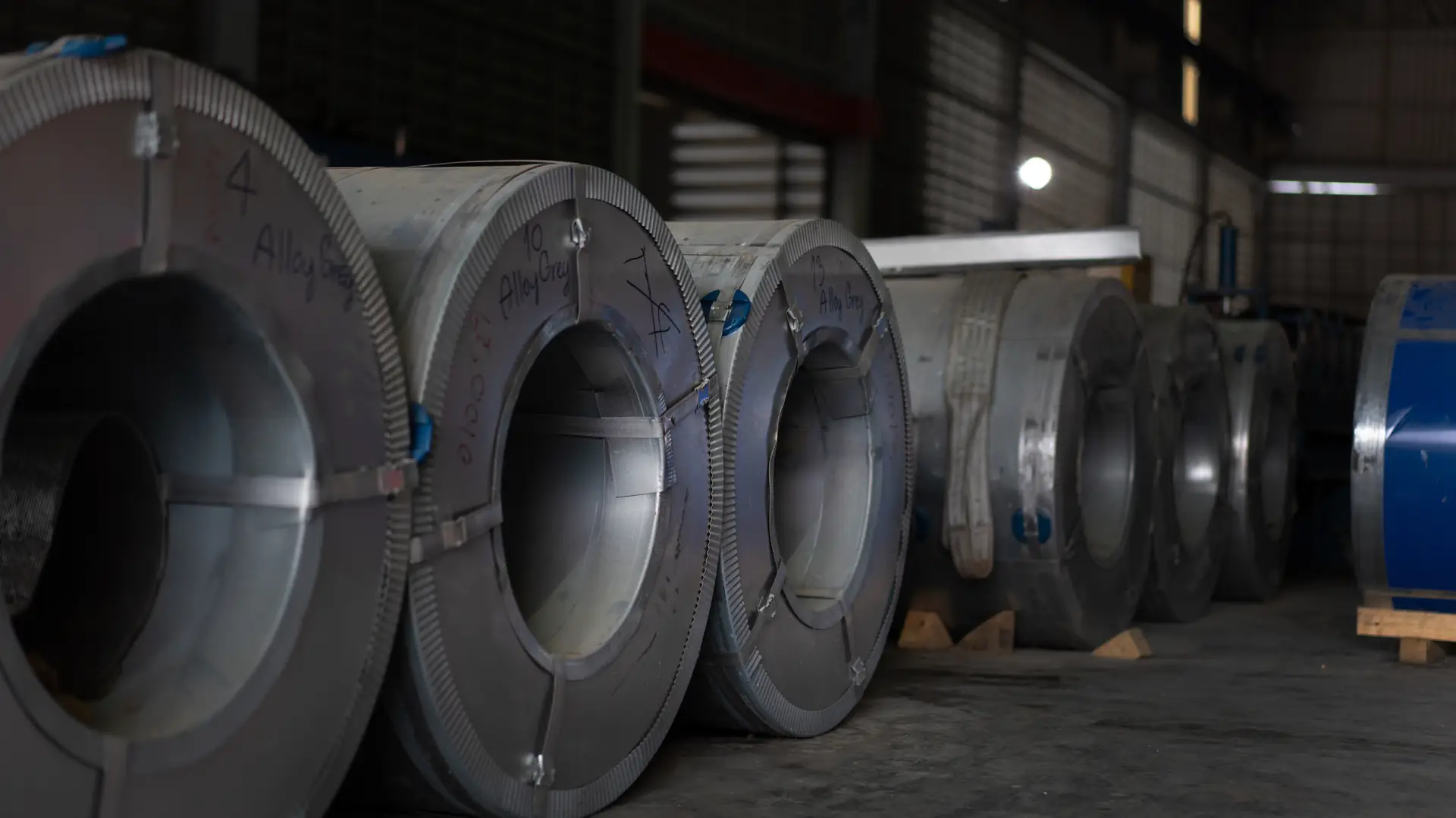
Turning a pile of scrap and raw alloys into a high-precision stainless steel sheet that meets exacting engineering standards is a delicate dance of science and logistics. It’s where the theoretical advantages of a good sourcing strategy meet the harsh realities of industrial production. The pressure to maintain quality while optimizing for speed and cost is immense, and this is where an integrated supply chain truly proves its worth.
Ensuring Metallurgical Integrity
The core challenge is technical. Every batch of stainless steel must have the precise chemical composition and physical properties required by the end-user, whether it's for a surgical instrument or a skyscraper facade. This requires constant monitoring and control during the melting, casting, and rolling phases. A slight deviation in temperature or a minor impurity can render an entire batch useless. We use a network of IoT sensors[^3] throughout our production lines to track dozens of variables in real-time, ensuring that every coil and sheet meets specification before it ever leaves the mill.
The Logistical Labyrinth
Once the steel is produced, the logistical challenge begins. A finished coil is heavy, bulky, and needs to be transported safely and efficiently across continents. I remember a client in Germany who faced a complete production halt because their previous supplier's shipment was stuck in a port for two weeks due to a documentation error. This is the kind of bottleneck that our integrated system is designed to prevent. Because we manage everything from production to export delivery, we have full control over the process, using a unified digital platform to ensure all documentation is correct and all logistical steps are synchronized. This eliminates the black holes of information that plague fragmented supply chains.
| Production Stage | Key Challenge | MFY's Integrated Approach |
|---|---|---|
| Melting & Alloying | Precise Chemical Composition | Real-time sensor monitoring and automated adjustments |
| Rolling & Finishing | Consistent Thickness & Surface Quality | Laser measurement and quality control gates |
| Logistics & Export | Delays, Damage, Documentation Errors | Unified digital platform for seamless tracking & clearance |
What Innovative Solutions Are Overcoming These Supply Chain Bottlenecks?
Traditional methods and siloed communication can't solve modern bottlenecks. This leaves businesses vulnerable to disruption, inefficiency, and a loss of competitive edge. New technologies are providing powerful, innovative solutions.
Innovative solutions include implementing IoT sensors for real-time production monitoring, using AI for demand forecasting and inventory optimization, and leveraging blockchain for transparent, end-to-end traceability. These technologies create a more agile and resilient supply chain.

This is where the revolution truly comes to life. We are no longer just improving old processes; we are creating entirely new capabilities. Technology is the engine that allows us to build the transparent, responsive, and resilient supply chains that our clients demand. It's about turning data into decisions and visibility into a competitive advantage.
Blockchain: The New Trust Protocol
One of the most exciting innovations is blockchain. For years, proving the provenance of materials was difficult, leading to issues with counterfeit products and questions about sustainability claims. Blockchain provides an immutable, decentralized ledger where every transaction—from the mine to the mill to the final customer—is recorded and verified. We are exploring this to provide our clients with a "digital passport" for their steel. They can scan a QR code on a coil and see its entire history, including its chemical composition, production date, and recycled content percentage. This builds unprecedented trust and is crucial for meeting stringent ESG and regulatory requirements.
AI and IoT: The Brains of the Operation
If blockchain is the trust layer, then the Internet of Things (IoT) and Artificial Intelligence (AI) are the nervous system and brain. IoT sensors on our machinery, in our warehouses, and on our shipments collect a constant stream of data. AI algorithms then analyze this data to optimize everything. They predict when a machine needs maintenance before it breaks down, adjust production schedules based on real-time demand signals, and optimize shipping routes to avoid delays. It’s like having a digital twin of our entire supply chain, allowing us to run simulations and make smarter, faster decisions. This proactive approach is a world away from the reactive model of the past.
| Problem | Technology Solution | Business Benefit |
|---|---|---|
| Lack of Traceability | Blockchain | Immutable provenance, ESG compliance, counterfeit prevention |
| Unplanned Downtime | AI-driven Predictive Maintenance | Increased uptime, lower maintenance costs |
| Inventory Mismatch | AI-powered Demand Forecasting | Reduced carrying costs, improved order fulfillment |
| Logistical Delays | Real-time IoT Tracking | Proactive problem-solving, improved delivery times |
How Is the Stainless Steel Supply Chain Set to Evolve in the Future?
The industry never stands still. Falling behind the curve means losing your competitive edge in a fast-moving global market. The future is hyper-personalized, fully automated, and fundamentally sustainable.
The future supply chain will be characterized by hyper-automation, predictive analytics, and a fully circular economy. Expect greater customization of products, on-demand manufacturing, and supply chains that are not just efficient but also regenerative and fully transparent to the end consumer.

Looking ahead, the pace of change will only accelerate. The innovations we see today are just the beginning. The goal is to create a supply chain that is not just resilient but predictive; not just efficient but autonomous. At MFY, our vision is to be at the forefront of this evolution, building the platform that will power the next generation of the stainless steel industry.
The Platform-Driven Ecosystem
The future is not about one company controlling everything, but about a digital platform that seamlessly connects all stakeholders. Imagine an ecosystem where an architect’s design software can automatically communicate material specifications to our mill, which then schedules production and coordinates with logistics providers for delivery to the construction site, all without human intervention. This "platformization" of the industry will break down the final silos, creating a truly unified and responsive network. It will enable on-demand manufacturing and mass customization of steel products.
Sustainability as the Default
In the future, a circular economy will not be a trend; it will be the baseline operational model. We will see advancements in material science that allow for 100% recyclability without any loss of quality. Supply chains will be designed to be regenerative, minimizing waste and energy consumption at every step. Transparency will be absolute, with consumers able to track the environmental impact of their products from start to finish. Companies that cannot provide this level of sustainability and transparency will simply be left behind.
| Future Trend | Business Impact |
|---|---|
| Hyper-Automation | Drastically reduced labor costs and human error |
| Predictive Supply Chains | Elimination of stockouts and overstock situations |
| Full Circularity | Price stability and insulation from raw material volatility |
| Mass Customization | Ability to serve niche markets with high-margin products |
Conclusion
The stainless steel supply chain is no longer just about moving metal; it's about moving data intelligently. Embracing this digital transformation, from blockchain to AI, is now essential for building the resilient, transparent, and sustainable supply chains required to compete and win in the global market.
Have Questions or Need More Information?
Get in touch with us for personalized assistance and expert advice.



 English
  Русский